Drew Müller · 2 September 2026
Artisans in the Cotswolds have launched a dedicated workshop to revive traditional elm carving techniques that once defined regional furniture making. The project draws on historical practices to train new practitioners in hand tools and joinery methods suited to elm timber.
Roots of Elm Woodworking in Britain
Elm has long been valued for its durability and resistance to splitting, qualities that made it ideal for chair seats, table tops and structural components in vernacular furniture. Records from the 17th and 18th centuries show Cotswolds workshops producing turned and carved elm pieces for local households and farms. Industrialisation and Dutch elm disease reduced both supply and skilled labour, leaving few active carvers by the late 20th century.
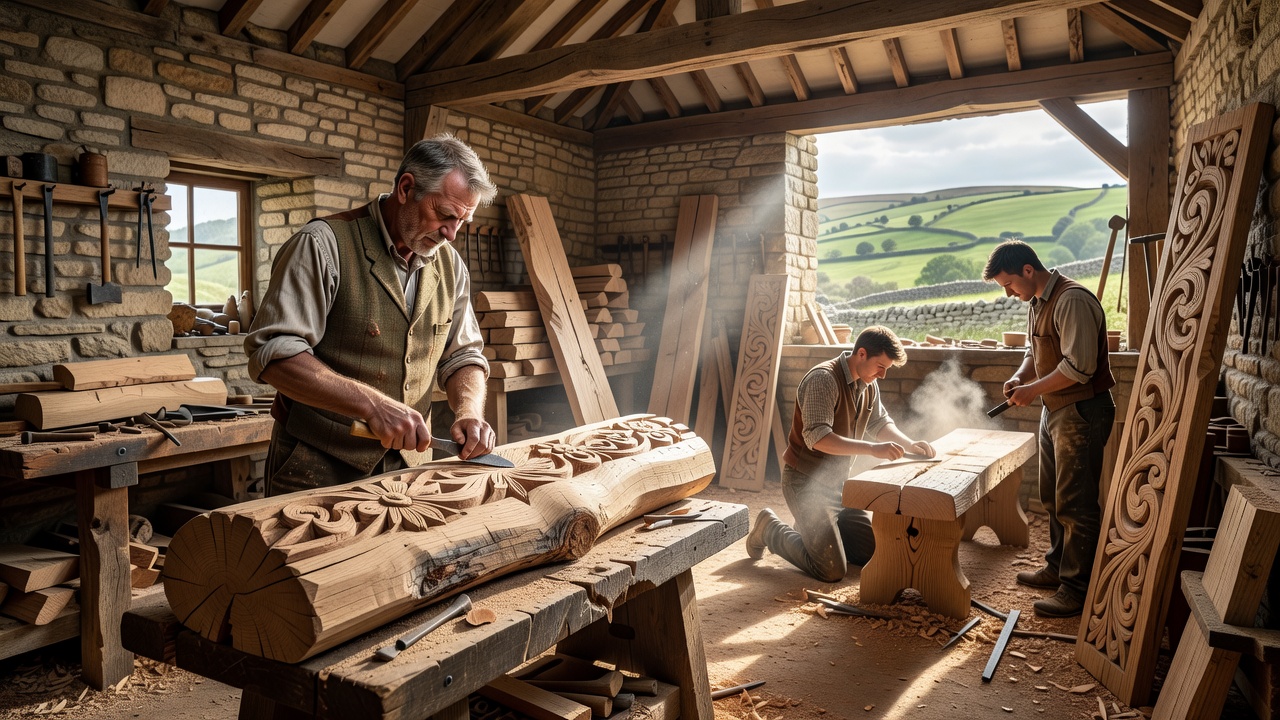
The new workshop sources air-dried elm from managed stands in Gloucestershire and Oxfordshire. Instructors emphasise grain reading, relief carving and the use of spoon gouges and chisels that replicate patterns found on surviving pieces in local museums. Trainees learn to season timber correctly to minimise movement after carving.
Workshop Methods and Training Outcomes
Daily sessions combine demonstration and supervised practice. Participants first master basic motifs such as rope twist and leaf scrolls before progressing to larger panels. Emphasis is placed on maintaining tool sharpness and consistent pressure to avoid tear-out in the interlocking grain of elm. The programme also covers traditional finishes including linseed oil and beeswax that protect the wood without obscuring figure.
Early graduates have completed commissions for heritage properties and small-scale furniture makers. The workshop records each piece with photographs and material provenance to support future research into regional styles. Demand for short courses has exceeded initial projections, prompting plans for an expanded intake next year while preserving the focus on hand skills rather than mechanised production.