Parker Schröder · 13 October 2026
Elm Timber's Resonance Properties Inspire Instrument Craft Workshops Across Northern England
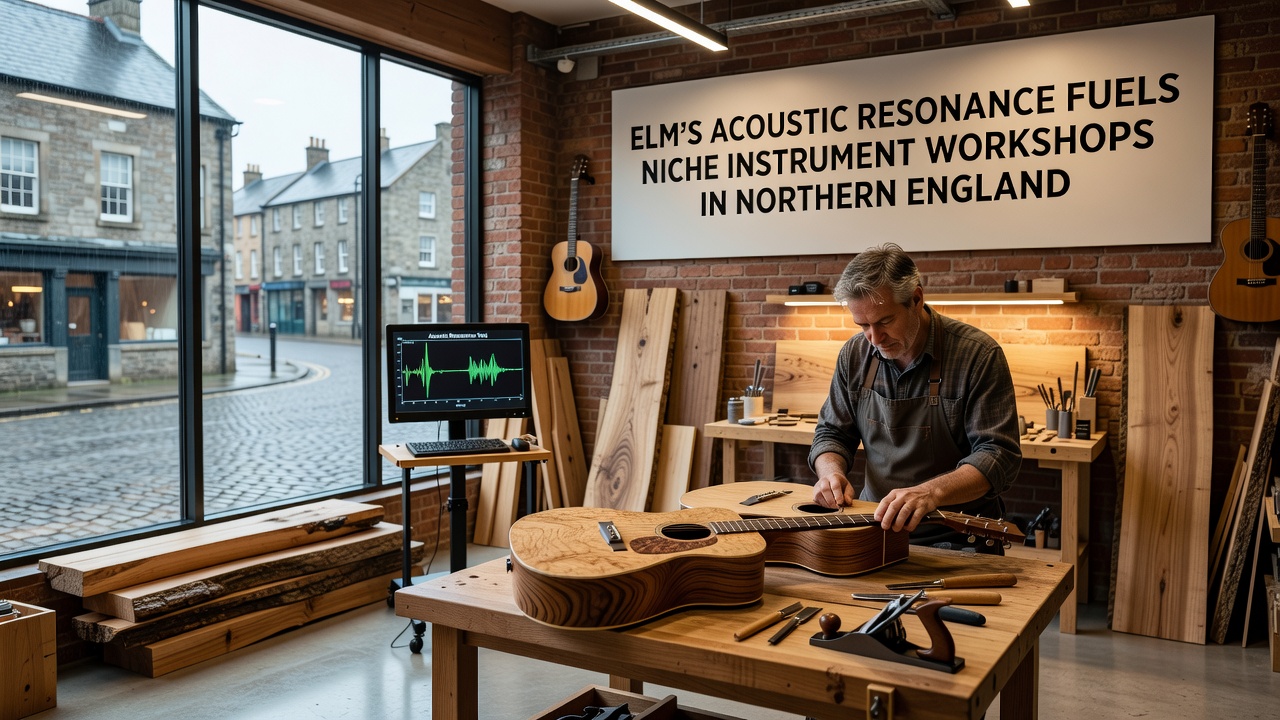
Elm wood exhibits distinctive acoustic resonance that supports vibration transmission in stringed instruments, and this characteristic has prompted specialized workshops throughout northern England where artisans construct guitars, lutes, and similar items. Data from forestry assessments show that mature elm specimens yield timber with density levels between 500 and 650 kilograms per cubic meter, a range that contributes to balanced tone production when components are properly seasoned.
Workshops in regions such as Yorkshire and Lancashire schedule sessions that focus on selecting elm blanks for backs and sides, then shaping them to optimize sound projection. Participants learn to measure resonance frequencies using simple tapping techniques before final assembly, and these methods draw on established wood science principles documented by the US Forest Products Laboratory. Training programs typically run for three to five days, with groups limited to eight people to allow individual guidance on jointing and finishing.
Material Properties and Selection Criteria
Researchers at institutions including those affiliated with Natural Resources Canada have recorded that elm's interlocking grain structure reduces splitting during carving while maintaining stiffness necessary for sustained note decay. In practice, craftspeople examine growth rings under magnification to confirm uniformity, then kiln-dry the wood to 8 to 12 percent moisture content before use. This preparation prevents warping once instruments reach performance venues where humidity fluctuates.
October 2026 calendars list multiple intensive courses in Hebden Bridge and Hexham that pair elm with spruce soundboards sourced from sustainable stands. Each session includes demonstrations of how quarter-sawn elm planks respond differently under string tension compared with maple alternatives, and attendees receive data sheets listing measured frequencies for reference during their own builds.
Workshop Formats and Regional Participation
Facilities in the north have adapted disused textile mills into dedicated spaces equipped with dust extraction systems and precision planers suited to elm's hardness. Instructors demonstrate the sequence from rough milling through neck profiling, emphasizing that elm's natural oils provide a degree of natural lubrication during sanding operations. Groups often include participants from professional orchestras who seek replacement parts for period instruments, alongside hobbyists exploring new materials.
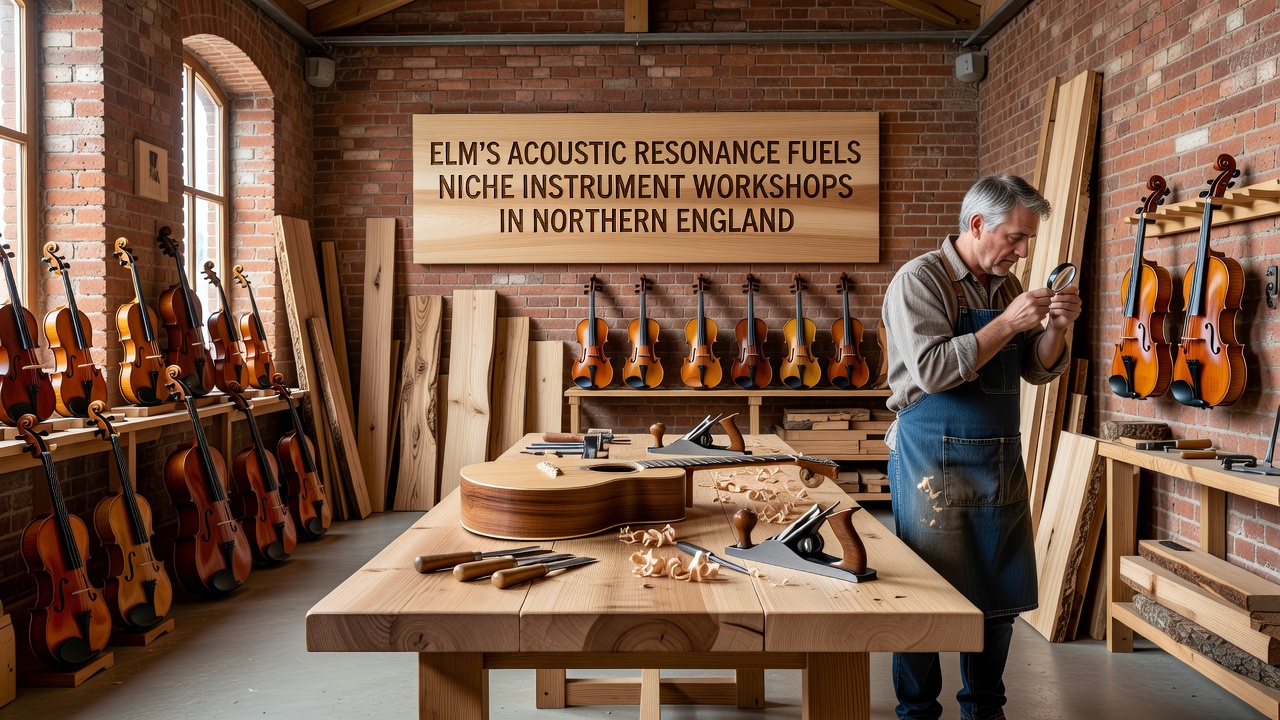
Enrollment figures from 2025 indicate steady interest, with 120 individuals completing at least one module across five northern sites. Organizers coordinate with local sawmills to ensure traceability of each log batch, and records confirm that elm recovered from urban plantings constitutes roughly 40 percent of material used in these programs. Such sourcing aligns with broader efforts to utilize timber from disease-resistant cultivars planted in recent decades.
Acoustic Testing and Outcome Measurements
Simple spectrographic apps now allow builders to record tap tones and compare results against established benchmarks. One documented case involved a batch of Yorkshire-grown elm that produced fundamental frequencies averaging 180 hertz when tested as guitar backs, values that fall within ranges previously published for traditional tonewoods. Follow-up evaluations after six months of playing showed minimal drift in these readings when humidity controls remained consistent.
Additional programs scheduled for late 2026 will incorporate portable laser vibrometers borrowed from university engineering departments, enabling quantitative mapping of nodal patterns across finished soundboards. These tools supplement older auditory methods and provide participants with graphical outputs they can archive for future reference or comparison studies.
Conclusion
Elm's measured acoustic characteristics continue to support niche instrument workshops in northern England through structured training that combines material science with hands-on fabrication. Records from participating sites document consistent production of playable instruments, while sourcing practices reflect regional forestry data on available stock. As programs expand into 2026, participants gain access to both traditional techniques and emerging measurement methods that refine the use of this timber in musical applications.