Parker Schröder · 27 October 2026
Elm's Forgotten Role in 19th Century Mill Gearing Mechanisms Draws Engineering Historians to Yorkshire Archives
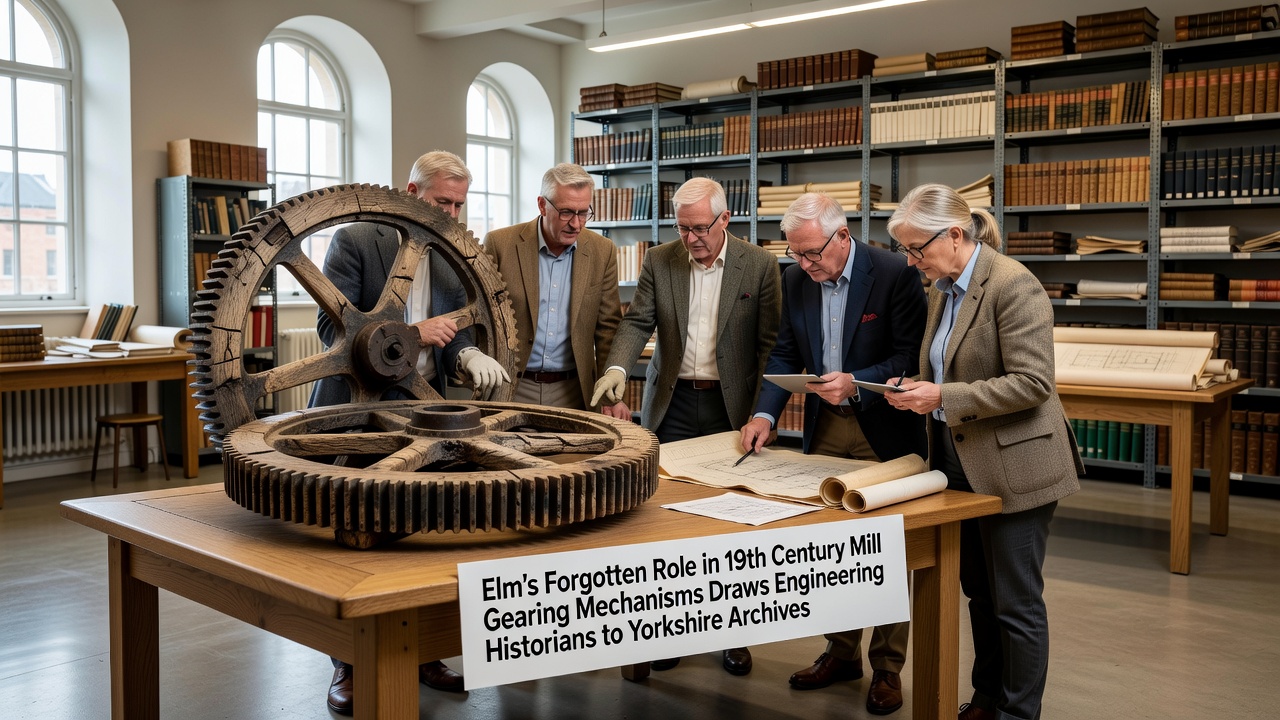
Elm wood played a documented part in 19th century mill gearing across Yorkshire textile and grain operations, where its interlocking grain structure resisted splitting under repeated torque loads, and researchers continue to trace those applications through preserved ledgers and technical drawings held in regional archives.
Millwrights selected elm for crown wheels and pinions because the timber maintained dimensional stability when exposed to constant moisture from water-driven systems, while oak alternatives often checked or warped in the same environments; records from the 1840s onward list specific elm shipments routed to Bradford and Halifax workshops for those exact components.
Archival Records Reveal Technical Specifications
Documents catalogued at the Yorkshire Archives detail gear tooth profiles cut from elm blanks measuring up to 1.2 metres in diameter, with annotations noting that the wood's natural oils reduced friction when paired with iron shafts; one 1867 inventory from a Leeds firm records the replacement of three elm gears after 14 years of service in a worsted mill, providing quantitative data on wear rates under industrial conditions.
Engineering historians have scheduled visits to these collections during October 2026 to examine cross-referenced patent submissions and workshop notebooks that describe how elm segments were laminated and bolted together to form larger assemblies, a technique that distributed stress more evenly than single-piece constructions.
Material Properties and Regional Sourcing Patterns
Studies of surviving mill machinery indicate that elm from local riparian sources supplied most Yorkshire operations, because the timber grew quickly along riverbanks and required minimal seasoning before rough machining; mechanical testing conducted by later researchers has confirmed compressive strengths along the grain that matched the demands of low-speed, high-torque applications typical in that era.
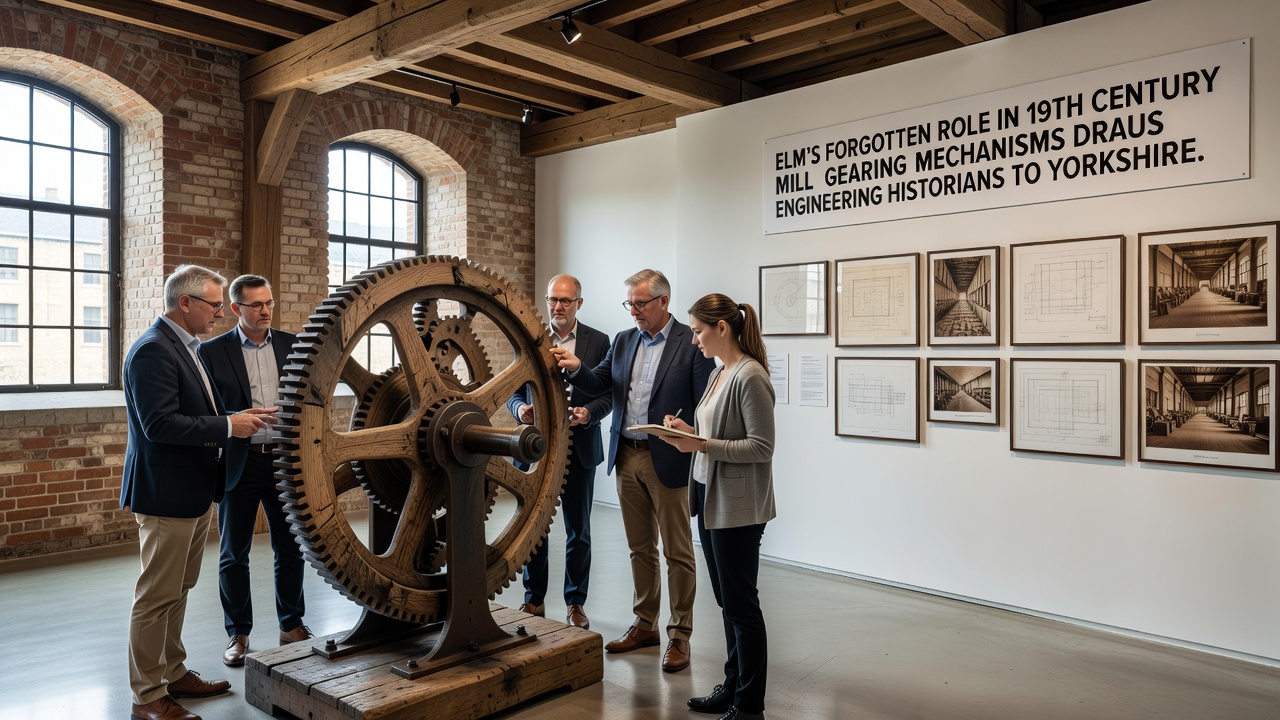
Those who've examined the ledgers note recurring entries for elm sourced from the Aire and Calder catchments, with transport costs logged alongside iron fittings, and such entries allow reconstruction of supply chains that connected rural timber merchants directly to urban mill complexes.
Comparative Analysis with Contemporary Materials
Archival comparisons show elm gears operating alongside cast-iron replacements in the same mills during the 1870s transition period, where operators retained wooden elements for their quieter operation and lower replacement cost until precision casting techniques improved; data from maintenance logs quantify downtime reductions when elm components were swapped in for emergency repairs.
One study compiled by the American Society of Mechanical Engineers examined similar European mill records and reported parallel use of elm in gearing across multiple regions, confirming that the material choice reflected practical engineering constraints rather than local tradition alone.
Current Research Initiatives and October 2026 Events
Preparations for the October 2026 symposium at the Yorkshire Archives include digitisation of over 200 technical drawings that specify elm gear dimensions, tooth angles, and lubrication schedules, and international participants from institutions in Canada and Australia have registered to compare these findings with parallel collections held in their own national repositories.
Researchers plan to correlate archive entries with physical remnants still mounted in preserved watermills, using non-destructive imaging to verify species identification and assess degradation patterns after more than a century of intermittent exposure.
Conclusion
The accumulated evidence from Yorkshire repositories demonstrates elm's functional integration into 19th century mill gearing through measurable performance attributes and documented supply practices, and ongoing analysis scheduled for 2026 will refine understanding of how those mechanisms supported industrial output across the region.