Zoe Vogel · 24 November 2026
Forestry Economists Examine Elm Replanting Records for Carbon Sequestration Insights
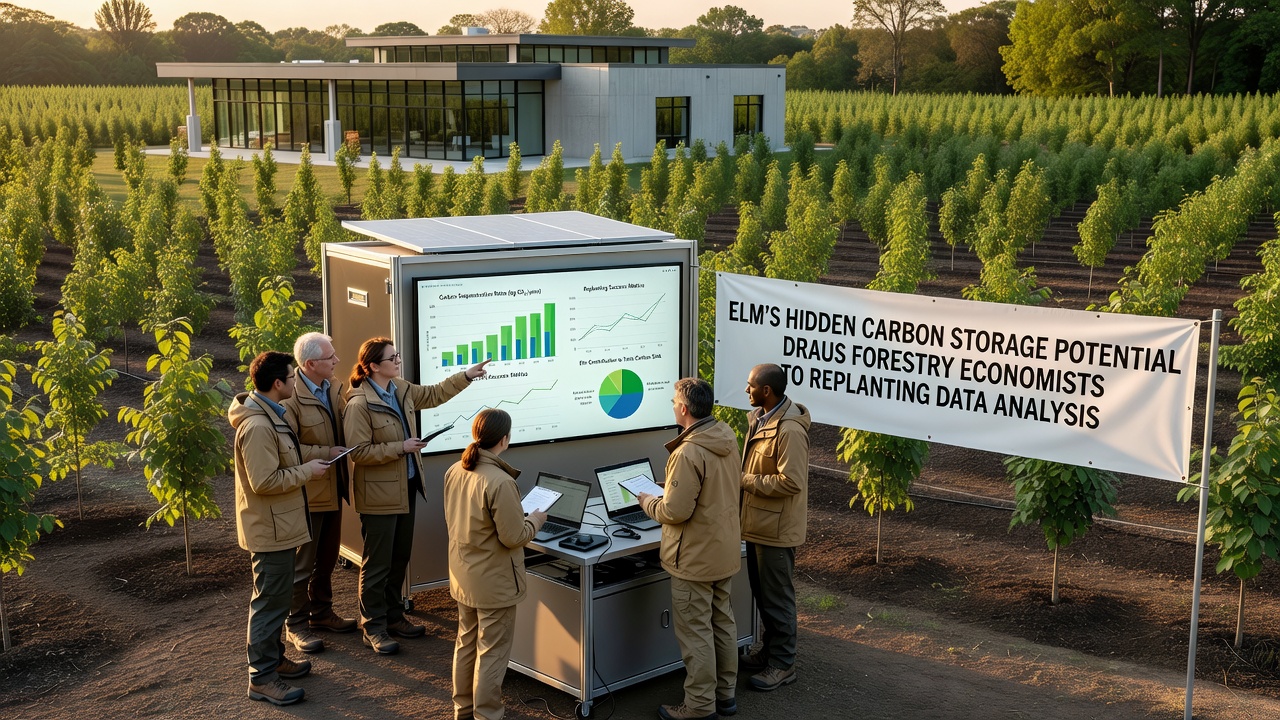
Elm species have drawn attention from forestry economists who compile replanting datasets to quantify carbon storage across various regions, and recent compilations show that mature elm stands sequester between 2.5 and 4.8 tonnes of carbon per hectare annually according to measurements compiled by the Canadian Forest Service. Those figures come from long-term monitoring plots established in the 1990s, which continue to feed models that project storage potential through 2040.
Replanting Datasets Fuel Economic Models
Economists at several universities now integrate replanting records with satellite-derived biomass estimates, and the combined datasets allow projections of net carbon gains when elm is reintroduced on former agricultural land. One analysis released by the Australian Bureau of Agricultural and Resource Economics and Sciences in early 2025 examined 18,000 hectares of restored sites and found that elm-inclusive mixtures stored 12 percent more carbon after 15 years than monoculture pine stands on comparable soils. Such comparisons help refine cost-benefit calculations that governments use when allocating restoration grants.
November 2026 will mark the next release of the European Environment Agency’s updated forest carbon inventory, and analysts expect elm replanting figures from the United Kingdom and the Netherlands to feature prominently because both countries expanded elm programmes after 2020 disease-resistant cultivar approvals. The inventory will supply fresh coefficients for economic models that translate stored carbon into tradable credits.
Regional Variations Shape Storage Estimates
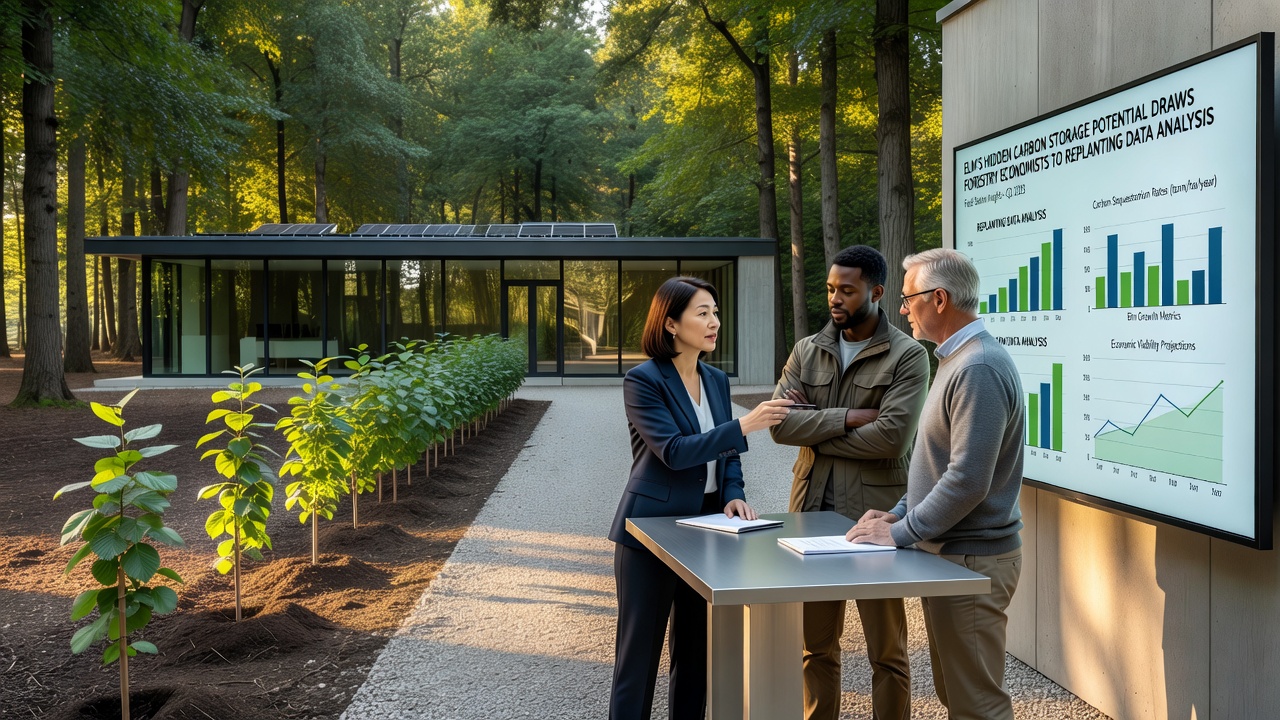
Soil type, rainfall patterns, and planting density all influence elm carbon uptake, and researchers note that clay-loam sites in southern Ontario retain higher biomass than sandy soils in the same climate zone. Data from the United States Forest Service’s Forest Inventory and Analysis programme, released in 2024, shows that elm plantings in the Midwest states average 3.1 tonnes of carbon per hectare yearly once trees reach 20 years, whereas Pacific Northwest sites report 2.7 tonnes under similar management. Those regional differences feed into national greenhouse-gas reporting frameworks.
Policy Applications of the New Figures
Carbon credit markets in New Zealand have begun accepting verified elm planting projects, and the first trades occurred in late 2025 at prices averaging NZ$48 per tonne. Government agencies in Canada are evaluating whether similar acceptance criteria could be applied under their offset protocols, which currently prioritise conifer species. Economists point out that including elm would diversify project portfolios and reduce risk from species-specific pests.
Replanting programmes also intersect with biodiversity targets, and data collected by the International Union of Forest Research Organizations indicates that mixed elm-oak stands support 23 percent more bird species than pure conifer blocks after a decade. Those co-benefits appear in cost-effectiveness tables that compare different restoration options for public land managers.
Challenges in Data Integration
Standardising measurement protocols across countries remains an obstacle, and working groups at the Food and Agriculture Organization have scheduled a technical meeting for March 2026 to align biomass equations for elm. Until then, economists apply conversion factors that carry uncertainty ranges of plus or minus 15 percent, which affects the precision of carbon credit calculations. Several pilot projects now test drone-based LiDAR surveys to reduce that uncertainty on operational scales.
Conclusion
Elm replanting datasets continue to supply fresh inputs for carbon accounting models used by forestry economists worldwide, and the scheduled 2026 inventory updates will likely refine projections further. Regional differences in storage rates, combined with emerging market acceptance and biodiversity co-benefits, shape how governments and project developers evaluate elm restoration as part of broader climate strategies.