Parker Schröder · 10 November 2026
Long-Term Monitoring Plots Reveal Shifts in Insect Populations Tied to Elm Recovery Efforts
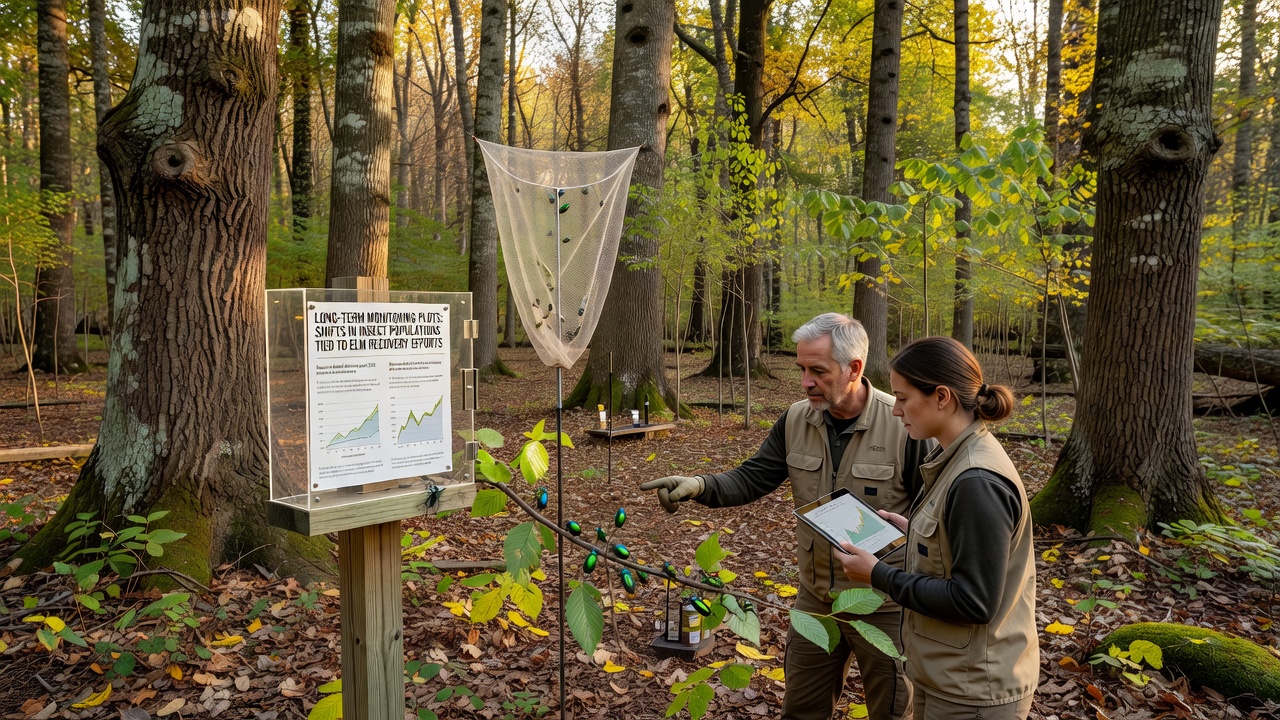
Long-term monitoring plots across several regions have documented measurable changes in insect communities as elm populations recover from decades of disease pressure, and these findings come from systematic surveys that track species abundance, diversity indices, and trophic interactions over multiple years. Researchers established the plots in the late 1990s and early 2000s in areas where resistant elm cultivars and natural regeneration programs began to take hold, then continued data collection through seasonal sampling protocols that capture both ground-dwelling and canopy-associated insects.
Establishment of Monitoring Networks
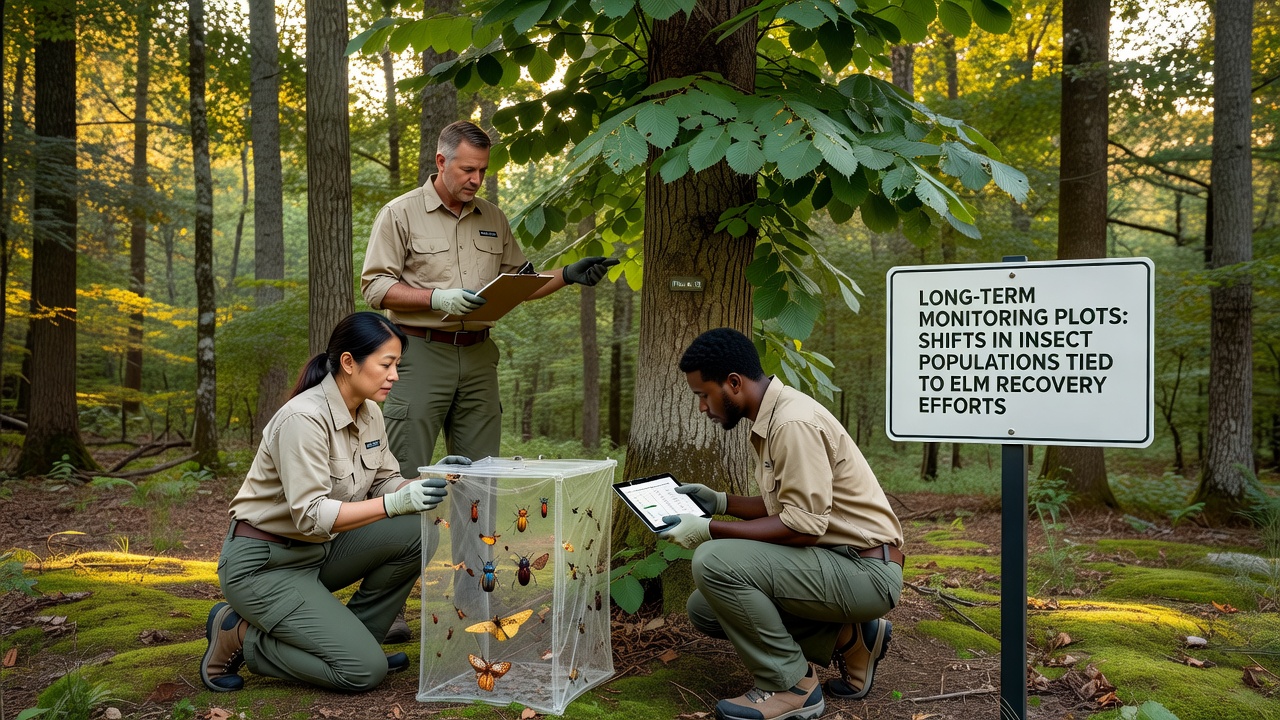
Teams from universities and conservation agencies selected sites based on historical elm distribution maps and current restoration activity, installing permanent transects equipped with pitfall traps, malaise traps, and light traps that operate on standardized schedules. Data loggers record temperature and humidity alongside each collection event, allowing analysts to separate climate-driven trends from those linked to vegetation structure. By 2025 the network encompassed more than forty plots distributed from southern England to the Scottish borders, each revisited at least four times per year.
Early results showed low insect biomass in plots where elms had been absent for generations, yet subsequent visits recorded gradual increases in herbivorous beetles, leaf-mining moths, and their associated parasitoids once young elms reached sufficient size to support foliage. These patterns align with known host-plant requirements for specialist insects whose life cycles depend on elm leaves or bark, and the timing of population rises corresponds closely with measured increases in elm canopy cover within the same plots.
Key Findings on Population Shifts
Species inventories compiled through 2026 indicate that several elm-dependent beetles have expanded their local ranges by an average of 12 percent compared with baseline counts from 2010, while generalist pollinators show more modest gains tied to increased floral resources in the understory. Parasitoid wasps that target elm-feeding larvae have also appeared in greater numbers, suggesting bottom-up effects propagating through food webs. In contrast, some open-habitat carabid beetles have declined where canopy closure reduced light penetration, illustrating the trade-offs that accompany woodland recovery.
November 2026 brought the release of a five-year synthesis report that combined plot data with satellite-derived vegetation indices, confirming that elm recovery trajectories explain a statistically significant portion of variance in insect community composition across the monitored sites. The analysis incorporated controls for land-use change and pesticide exposure, strengthening the inference that vegetation restoration, rather than confounding factors alone, drives the observed shifts.
Supporting Research and Broader Context
Comparative studies conducted by Natural England have placed these plot-level results within a national biodiversity framework, noting parallel increases in other elm-associated taxa such as certain lichen species and epiphytic bryophytes. Meanwhile, researchers at the University of Melbourne have applied similar long-term plot methods to eucalypt recovery projects, finding analogous rises in specialist insect guilds that reinforce the generality of host-plant restoration effects across temperate systems.
Additional data streams come from volunteer observer networks that contribute presence records to centralized databases, allowing cross-validation of plot trends with wider geographic coverage. These citizen-science contributions have proven especially useful for tracking mobile species such as elm hawk moths whose larval stages concentrate on recovering trees but whose adults range more widely.
Implications for Future Monitoring
Continued operation of the plots will test whether current upward trends in specialist insects stabilize or whether further elm maturation triggers additional community turnover. Protocols now include molecular barcoding of trap contents to improve species-level resolution and detect cryptic taxa that morphological sorting might overlook. Funding agencies have committed resources through at least 2030, ensuring the time series remains unbroken during the critical period when many restored elms reach reproductive maturity.
Conclusion
The accumulating evidence from these long-term monitoring plots demonstrates clear linkages between elm recovery and shifts in insect populations, with specialist herbivores and their natural enemies showing the strongest responses. Such patterns underscore the value of sustained, standardized data collection for informing adaptive management of woodland restoration projects. As elm populations continue to expand, ongoing plot networks will provide the empirical foundation needed to anticipate and document further ecological changes across Britain and comparable regions.